Sexual violence and war: the pervasiveness of violence against women and girls.
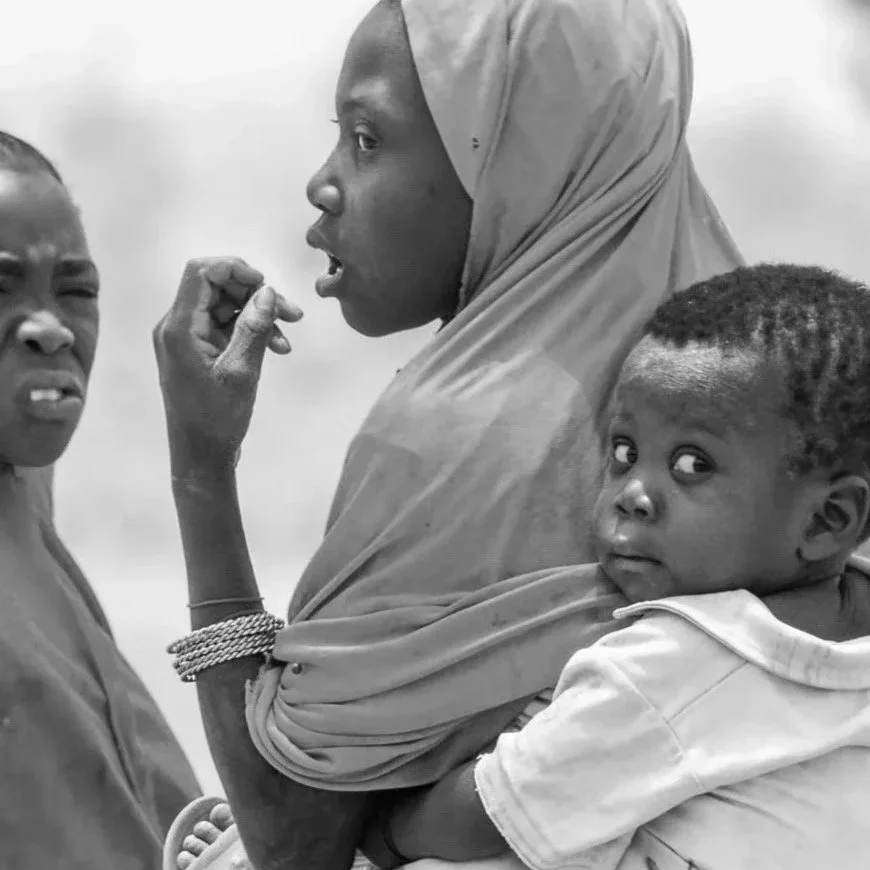
A young woman holding a baby. Photo by Ayano Tosin
by Anne Wilson
Warning : This piece includes information and descriptions related to violence against women and girls that may be distressing or triggering. Reader discretion is advised.
“This war has, in many ways, been fought on the backs and bodies of women and girls”.
The report from Medicines sans Frontières (MSF) on the brutal sexual violence inflicted upon women and girls amid the Darfur War is a harrowing read..
At the time of writing, this conflict will be in its fourth year. For the women and children of Darfur in Sudan, that is four long years of repeated cycles of violence and atrocities related to war in Sudan.
It has been reported that when some fighters tire of fighting each other, the bodies of women and girls become their war zones.
Sexual violence has become so routine that even as the women and girls go about their daily lives, they are constantly aware of the omnipresent threats that exist in homes, in displacement camps, on fields, in markets and on the roads and paths they are forced to take when collecting water.
The perpetrators are not just fighters. Reports of civilians participating in these transgressions are mentioned in the report and are well documented elsewhere.
Drawn from medical data and survivors’ testimonies from 2024 and 2025, MSF has documented the brutality of the war on women in North and South Darfur and their pleas for contraceptives to shield them from bearing the children of their rapists.
They know that sexual violence is inevitable.
The women give accounts of abduction, rape, intimidation, physical harm and deliberate acts of humiliation such as having their hair shaved after being raped or being assaulted (sexually or otherwise) in front of family, partners, husbands and children.
Women are beaten with guns, others are robbed of their belongings and clothing.
But here’s the thing - this is not the first time that the plight of these women and children has been reported on.
In December 2024, the UN produced a report calling for the end of gender based violence in Sudan and in it, the authors set out the atrocities inflicted upon the women of Sudan. Two years on, and the women of Darfur are still at risk.
When pervasive conflict-related sexual violence (CRSV) becomes a part of daily life and there is a total lack of justice, it becomes embedded into the fabric of that society. A man interviewed by MSF in 2024 goes on to say that
“At the beginning of the conflict, we saw many cases of rape … now, there is still rape, but people don’t talk about it anymore …”
Despite the call for action in the MSF Report and the UN’s calls for the end of GBV and CRSV, violence against women and children continues to persist.
One woman from Southern Sudan, Jebel Mara, ends her contribution to the MSF report by saying that
“…There is no way to stop the rapes. The only way is to try and stay home, and to not go out as much.”
Her despair is an indictment on those who have the power to end the violence. And when authorities cannot hear the voices of the women of Sudan, perhaps they will hear the voices of those who are outraged by these transgressions.